

Beyond the Bike
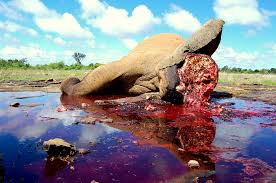
‘At the current rate of poaching, elephants will not exist in Africa in 12 years time’ Kelvin, educational officer for Game Rangers International (GRI), explains to a group of American & European tourists at the Lilayi Elephant Orphanage near Lusaka, Zambia’s capital. In the background, Musole, a 2 year old bull elephant plays in the mud, seemingly enjoying the audience. Named after the ranger shot dead by a poacher whilst trying to protect his mother in 2014, he will be released back into the wild at Kafue National Park in 2016. We cycled out to the park, 250km west of Lusaka, spanning an area the size of Wales, to find out more about the economics of the ivory trade and the poaching crisis that could destroy Africa’s largest mammal…
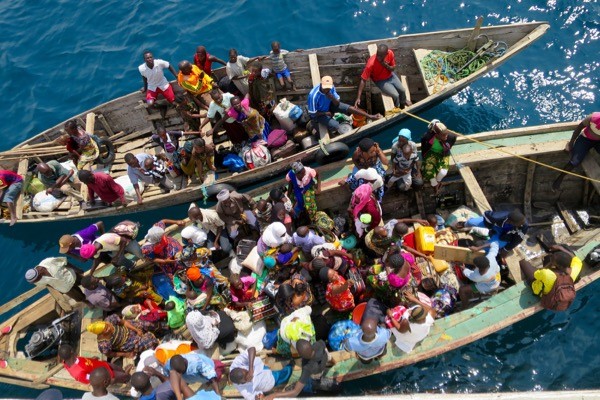

All aboard the MV Liemba… (literally)

Should the UK (& other nations) be spending 0.7% of GNI on AID?
As I highlighted in my last blog, the aid debate is probably the most contentious issue surrounding Africa development, highlighted by the recent spat between Bill Gates and Dambisya Moyo. Since then, we’ve travelled through Rwanda into the DRC and are now in Tanzania. All three countries have been recipients of vast sums of overseas aid and I’ve met and spoken with many stakeholders, including several people asking me for money - “Mzungu - give me muni’ is the usual catchphrase that I’ve been trying to ignore. On a macro level, meanwhile, the UK has been leading the way in meeting the UN commitment for countries to spend 0.7% of their gross national income (GNI) on official development assistance (ODA). In the UK, the majority of this money is spent by DfID, the Department for International Development and we were lucky to be hosted by its Rwanda chief, the impressive Laure Beaufils and her lovely family in Kigali…..
Is the discovery of Oil likely to be a blessing or a curse?
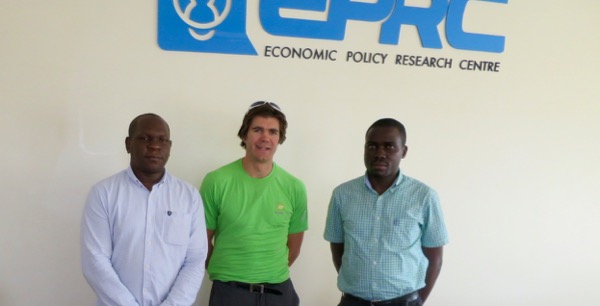
We finished our European cycle in Amsterdam, capital of the Netherlands, a city with a rich economic history built around strong trade links over the centuries. One concept famously associated with Europe’s 5th largest economy is the dreaded ‘Dutch Disease’, coined by the Economist newspaper in 1977 to describe the negative impact of the discovery, in 1959, of natural gas reserves on the rest of the economy. I flew from Amsterdam to Uganda and started the African leg of the Economic Cycle in Kampala with a visit to Makerere University. Here I met with two budding economists to discuss whether Dutch disease was a threat to Uganda as well as other challenges for African policy makers….

Should we STAY or should we GO?

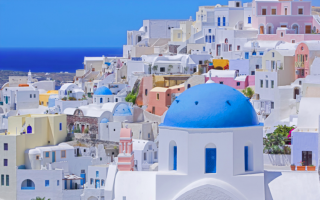
In my first blog on lessons from the financial crisis, I highlighted the importance of history in Economics, looking back to the Great Depression and even further to when China was the world's largest economy. But, as Claire (a Classics teacher) keeps telling me, most of the lessons we need for contemporary society can be obtained by studying the ancient civilisations of Athens and Rome. Thus this is the first, but hopefully not the last, Economic Cycle blog written by her, although she freely admits it has been shamelessly plundered (with his permission) from a truely fantastic lecture by Oxford Classicist Peter Thonemann. I think it is a great read and perhaps Angela Merkel and co should think about some of these ideas...
Only a few years ago most people’s image of Greece would have been beautiful beaches, whitewashed houses, vile drinks and those causing riots were most likely to be drunken Brits. In 2015 Greece summons up a whole new set of images: mass homelessness, teachers and nurses becoming dependent on food-banks, riots, an economic collapse and a social breakdown more rapid and more violent than anywhere else in the western world since WW2.